
Hay net - Round bales
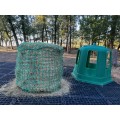
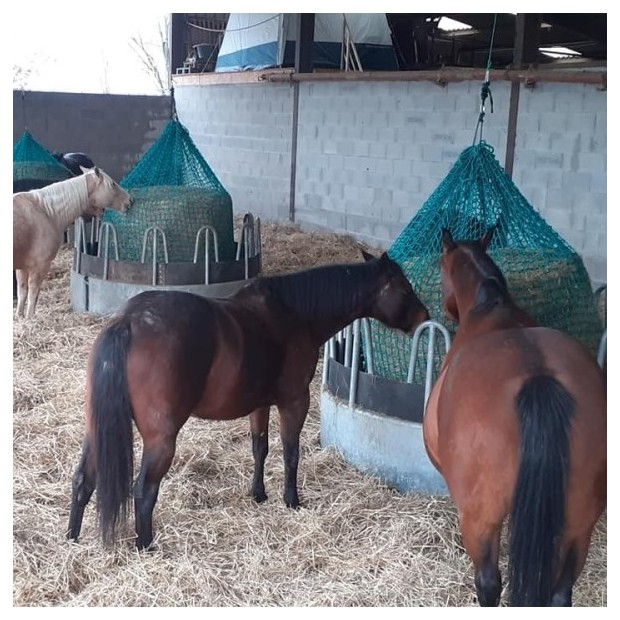
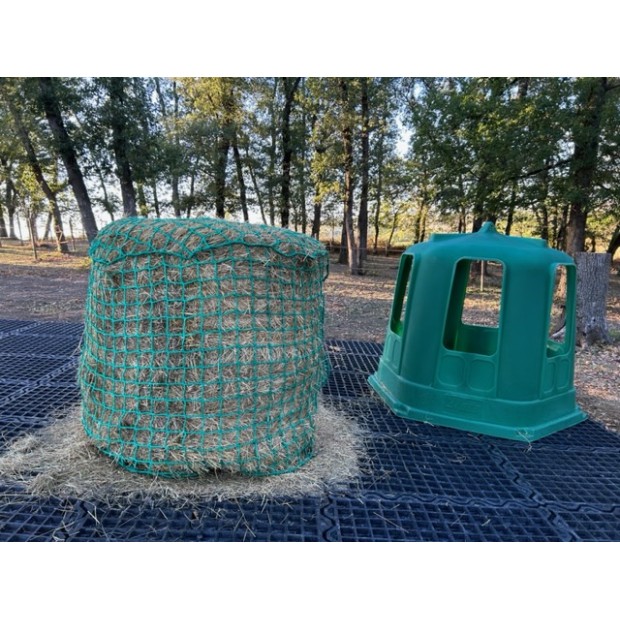
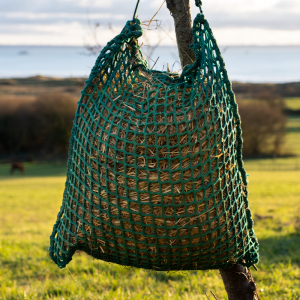
- "Sock" shape for bell, shelter, and hay rack
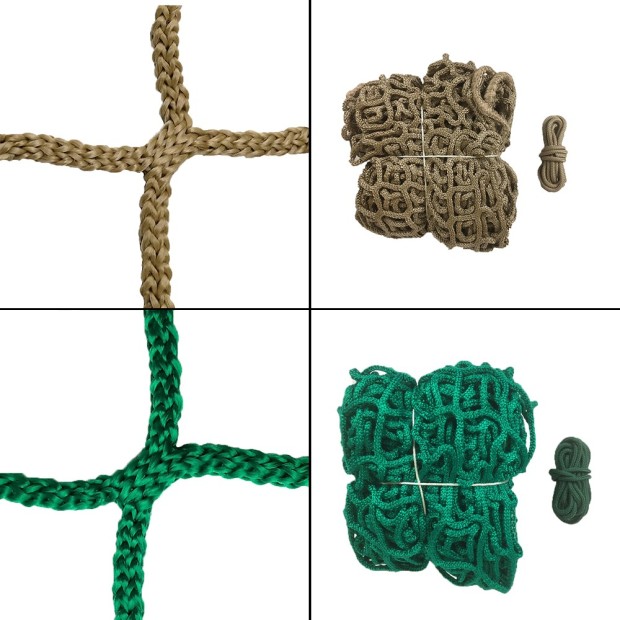
- Supplied with its 7 m closing rope (included free of charge)


Net shape
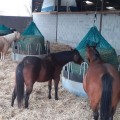
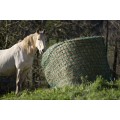
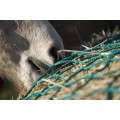
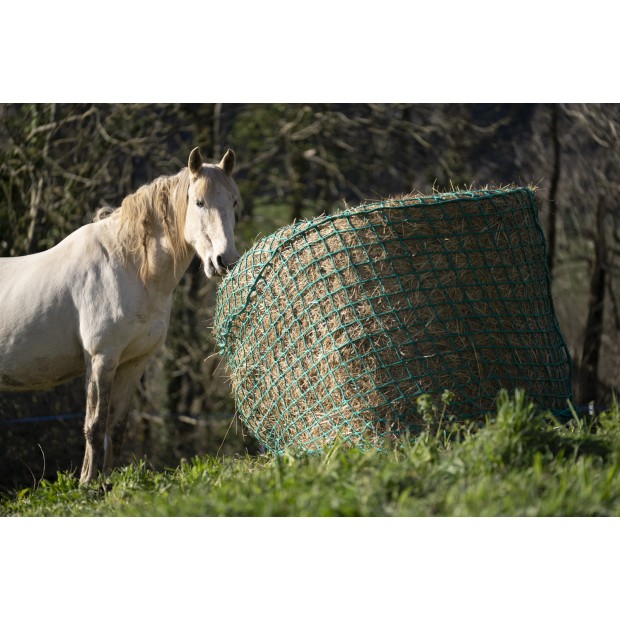
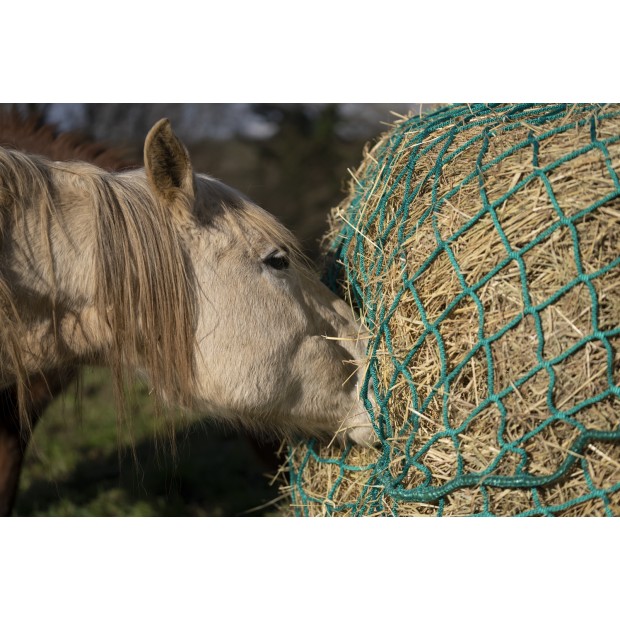
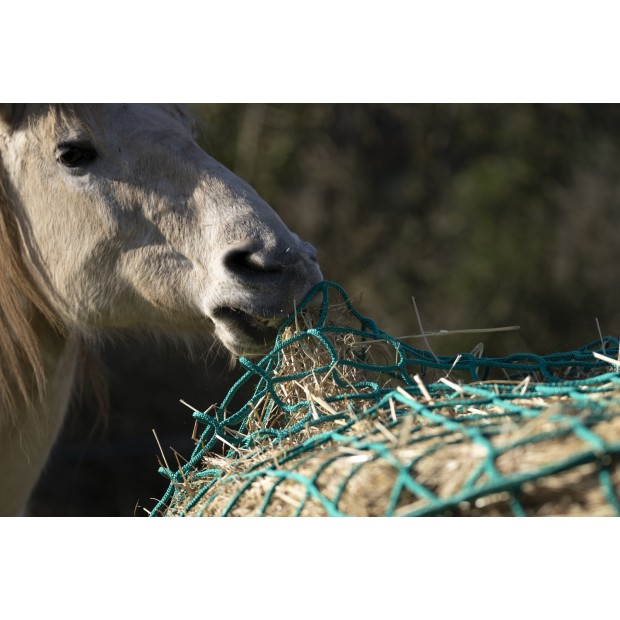
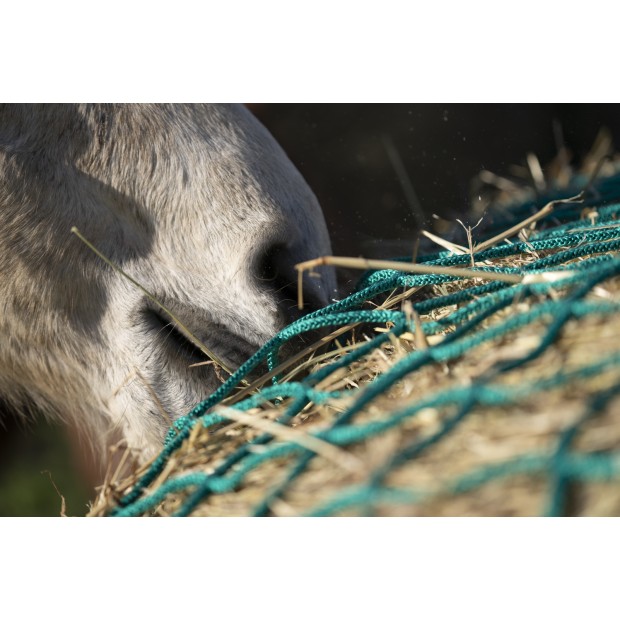
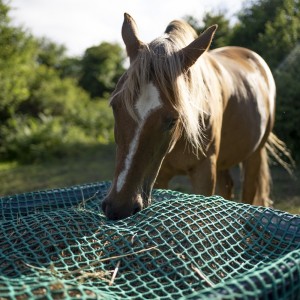
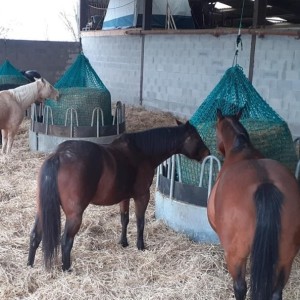
Designed to slip over hay bales, our round bale hay net can be placed on the ground or suspended in a shelter, a bell feeder, or a hay rack. Knotless, very flexible, and very soft, our net will not irritate your horses’ gums. It is odorless, rot-proof, and highly resistant to wear.
Available for all round bale sizes with small or large mesh.
The round bale hay net can also be suitable for square bales. Be sure to choose sufficiently large dimensions so it can be fitted on easily.
- To assist with closing, each net is supplied with a 7 m braided rope (included free of charge).
Warning: the 100 mm mesh net must be used with a closed-base container (hay rack, bell feeder, pallet box, trough) so that the equine cannot get a hoof caught in the mesh. For safety reasons, always choose mesh sizes smaller than the size of the horses’ hooves.
.jpg)
Choosing the right dimensions:
The choice of dimensions for a round bale hay net depends on several factors:
- The size of the round bale
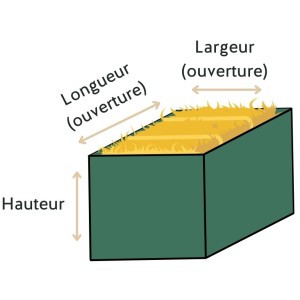
The net must be at least 30 cm wider than the bale to make it easy to fit on. For example, for a 130 cm bale, choose a net with a diameter of 150 cm.
- The level of hay compression
If the hay bales are poorly compressed, allow a margin of 40 cm to fit the net easily. For example, for a poorly compressed 120 cm bale, choose a net with a diameter of 160 cm.
- The consistency of bale size
If the bale size varies significantly, choose a net suitable for the largest bales.
- Here is the reference table showing the correspondence between your bale size and the net size to choose
| Net diameter x height | Height | Maximum bale diameter |
| 1.60 x 1.40 m | Short-height net (covers only the height of the bale) | 1.30 m |
| 1.80 x 1.60 m | 1.50 m | |
| 2 x 1.60 m | 1.70 m | |
| 1.60 x 1.90 m |
Long-height net (fully covers the bale) |
1.30 m |
| 1.80 x 1.90 m | 1.50 m | |
| 2 x 2 m | 1.70 m |
For easy use, the net must always be larger than your bales. It is better for your net to be slightly too large than too small.
If our standard dimensions do not meet your needs, you can order a custom-made net directly on our website and have it delivered within approximately 4 weeks!
Discover our two types of custom-made hay bale nets:
For any questions or if you need advice, please contact us!
Volume discounts:
Take advantage of our volume discounts applied in the cart. You can combine all our hay net references to reach the threshold required to benefit from your discount.
| From | Discount |
| €250 | - 5% |
| €400 | - 10% |
| €600 | - 15% |
| €850 | - 20% |
| €1,150 | - 25% |
Fitting the hay bale:
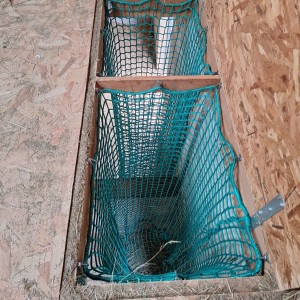
- Net taller than the bale height: place the bale inside the net or pull the net over the bale, lift the sides of the net and attach them to something suspended from the ceiling.
- Net the same height as the bale: place the bale inside the net or pull the net over the bale, secure the bottom of the net with a strap or a bungee cord.
Advice:
- Keep the net raised so that the horse cannot get a hoof caught. Hay placed on a pallet or on a large tire will prevent the horse from stepping on it and the hay from rotting. The 100 mm mesh net must not touch the ground. It must be placed in a hay rack with a closed base.
- In wet weather and muddy ground, set up several feeding points to preserve the ground.
Washing the net:
The quality and flexibility of your hay net may be affected by certain external factors such as horse saliva and/or prolonged use in bad weather and dirt. We therefore recommend regular washing.
You have several washing options while preserving its quality:
- Clean with a garden hose
- Wash at home in a washing machine or at a laundromat:
- Maximum temperature 40°C
- Add a natural washing product directly into the drum: sodium bicarbonate (for a sock-style net, use the equivalent of 2 small espresso cups)
- Add a natural fabric softener in the “softener” compartment: white vinegar (for a sock-style net, use the equivalent of 2 small espresso cups)
- Soak for several hours in a bathtub or large container:
- Add a natural washing product to the container: sodium bicarbonate (for a sock-style net, use the equivalent of 2 small espresso cups)
- Add a natural fabric softener to the container: white vinegar (for a sock-style net, use the equivalent of 2 small espresso cups)
Once your net is dry, please smell it. If you notice that the net has not fully softened and a hay odor remains, you can wash it again.
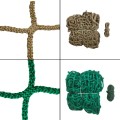
Our hay nets are made from very flexible and very soft yarns to protect horses’ gums. Their robust, UV-treated, rot-proof yarn provides excellent long-term durability.
- Material: High-Strength Polypropylene (HSPP)
- Braiding: Multifilament with a textile feel
- Mesh: Knotless
- Yarn diameter: 5 mm
- Edge reinforcement: 8 mm overlock stitching around the entire perimeter
- Environmental benefits: 100% recyclable and OEKO-TEX® Standard 100 Class I certified
- Origin: European Union
Advantages:
- Very soft and highly flexible
- Gentle on horses’ gums
- UV-treated
- Resistant to moisture and frost
- Excellent longevity for prolonged outdoor use
- Premium quality
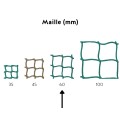
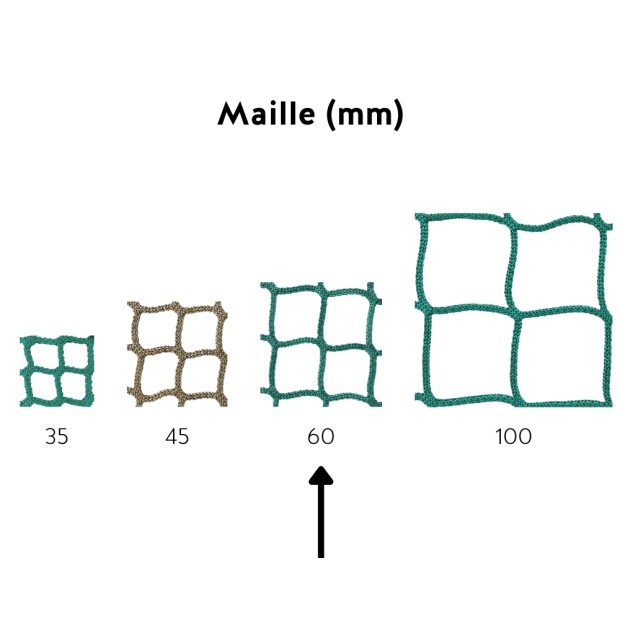
The smaller the mesh, the slower the hay is taken in.
| Mesh size (outer) | Purpose | |
| 100 mm | Very large mes | Limit hay waste, familiarisation with the net |
| 60 mm | Large mesh | Consumption slows down, transition to slow feeding |
| 45 mm | Small mesh | Introduction to slow feeding |
| 35 mm | Very small mesh | Slow feeding intensification |
| Note: The size expressed is that of the outer mesh. To calculate the inner mesh, you must subtract 10mm. | ||
The slow down of ingestion also depends on the level of hay compression and the length of the stalks.
For the same mesh, the distribution of hay will be different in a bag net and a round ball net.
- In a net bag, usually hay is loose
- In a round ball net, hay is compressed
- Hay compaction: hay compressed in a haystack will be harder to catch than hay loose in a bag
- Length of the strands: hay with short strand is more difficult to catch than hay with long strand
Tips :
- If your horses cannot all eat with the mesh installed, you can arrange several different mesh nets.
- Our bag nets are also available in double mesh with different size of mesh on each side.
If this is the first time you have put hay in a net and your horse is not used to it, he may be frustrated and can get angry. We advise you to gently accustom your horse to limit his frustration.
- Ruffle the hay out of the tufts of the mesh and leave some loose hay next to the nets.
- Choose a wide mesh net (60mm, 100mm) to promote a smooth transition.
Despite all the care taken in manufacturing, the net is a textile product that can be damaged by installation or use.
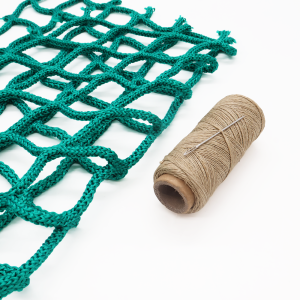
To repair the hole of your hay net, you can sew your stitches with a sharp needle of 1mm maximum and linen string of 0.3mm.
You can order a custom-made hay net directly from our website. All of our custom-made hay nets are available online.
Simply select the net of your choice, indicate your mesh and dimensions and the price will be displayed automatically!
Related products


You will also like

Hay net - Bag
Synthetic hemp rope
Organic cotton rope
Rope gymnastic ring
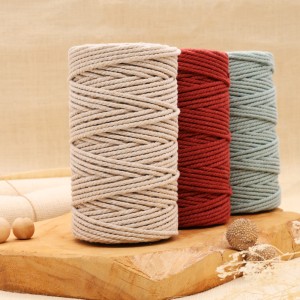
Macrame cotton rope - FR
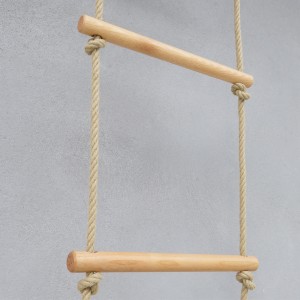
Wooden rope ladder
Polyester thermofixed rope
Jute braided rope
Wooden swing

Jute twine
Polished hemp rope

Polyester rope
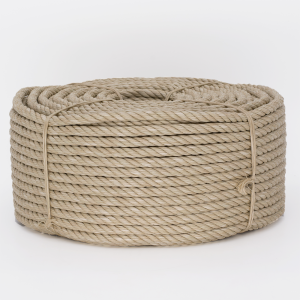
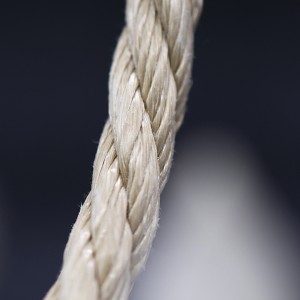
Polypropylene rope
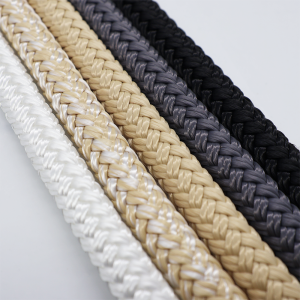
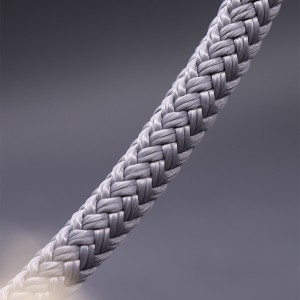
Unpolished hemp rope
On the blog
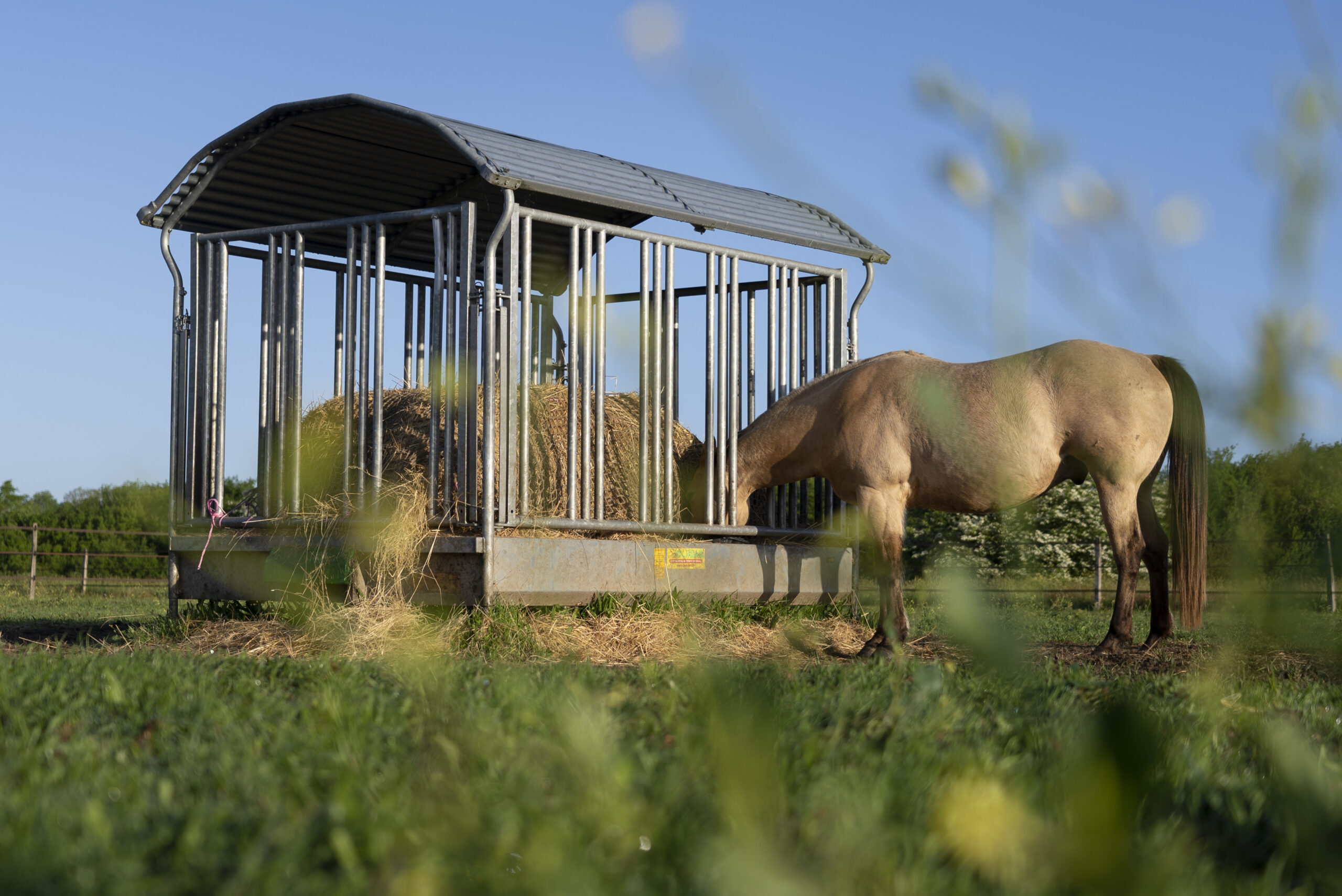
Quel filet à foin choisir pour un râtelier ?
Dans un râtelier, deux types de filets à foin peuvent être installés : le filet nappe et le filet balle ronde.
6 bonnes raisons d’opter pour les filets à foin
Entre bienfaits pour les chevaux et économies pour leurs propriétaires.
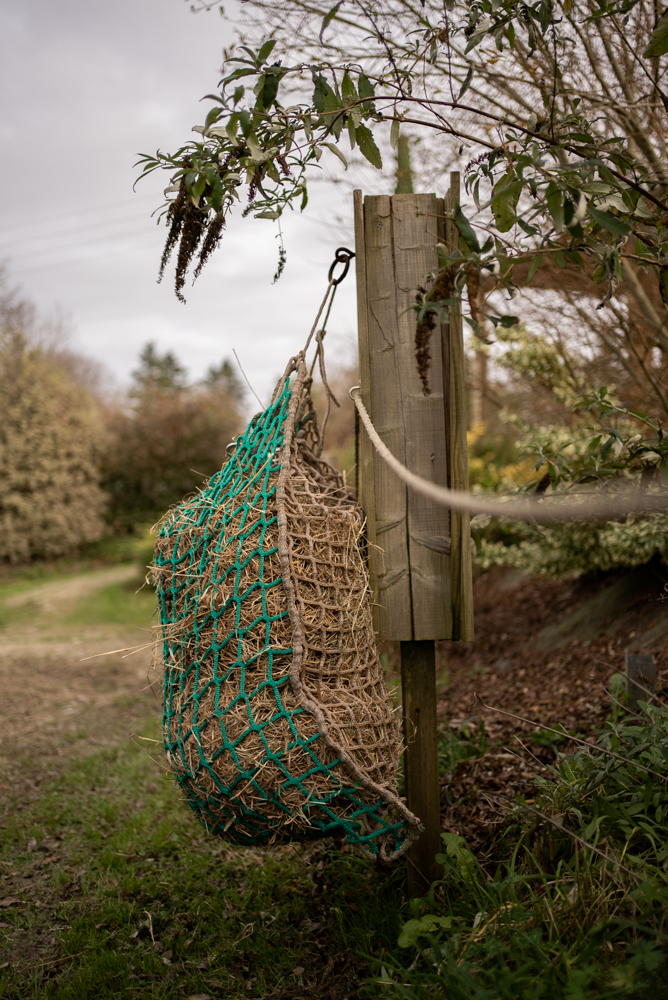
Quel filet à foin choisir ?
Le bon modèle : adapté à vos chevaux et à votre installation.