Many natural fibres are used to make rope:
- hemp
- cotton
- sisal
- jute
- linen
- coconut fibre
The strongest material is hemp. The most used materials in decoration are cotton and jute.
- Polypropylene
- Textured polypropylene (synthetic hemp)
- Polyester
- Nylon (Polyamide)
- Polyethylene
- Steel
- Latex
The breaking strength of a rope varies according to its raw material, construction, density, and diameter.
The tensile strength is the tensile capacity of a new rope when it is new, static, straight, knot-free and splicing-free. A tolerance of +/- 7% is always applied for the breaking resistance of a rope. For safety, no more than 80% of the breaking load of a rope when it is new should be used.
Expressed in KG, it refers to the tension capacity at standstill (weight); while expressed in decanewton (DaN), it refers to the tension capacity in motion (weight x speed). The use of a rope reduces its breaking resistance.
The main factors that attenuate a rope’s strength are: moisture, UV rays, heat, frost, abrasion, knots, splicing and chemical agents.
Polypropylene is the most economical and lightweight fibre. It has an excellent quality/price ratio for uses that do not require a rope with a high performance mechanical strength.
Polypropylene is floating and hydrophobic. It can be in permanent contact with water without degrading itself. It is resistant to moisture.
Density: 0.91
Polypropylene fiber has good UV resistance but it is still inferior to polyester and nylon.
For a better outdoor life, make sure that your polypropylene rope is treated against UV. All our polypropylene ropes are.
Polypropylene is resistant to mites, bacteria, strong acids and alkalis and ordinary solvents. It is sensitive to aromatic compounds. It dissolves in chlorinated solvents at high temperatures.
Customer review

en promo top
Related products
Polypropylene twine
You will also like
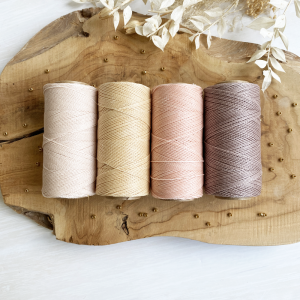
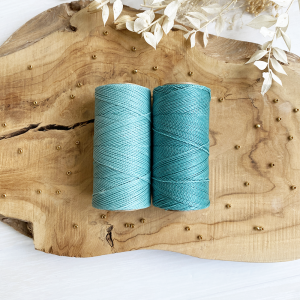
Linhasita thread
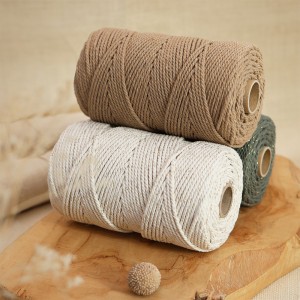
Macrame cotton rope - Recycled
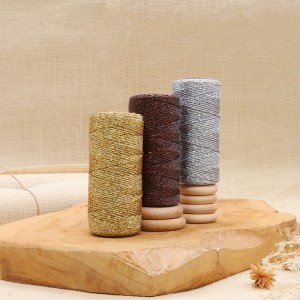
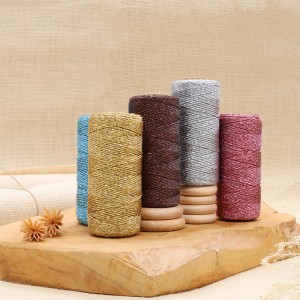
Metallic lurex yarn
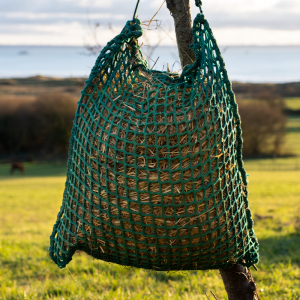

Hay net - Bag
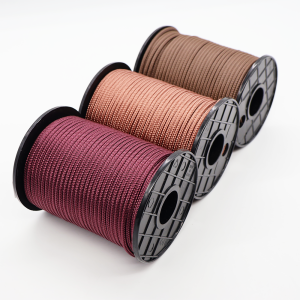
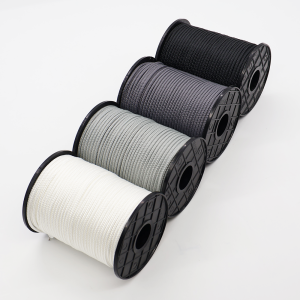
Polyester line
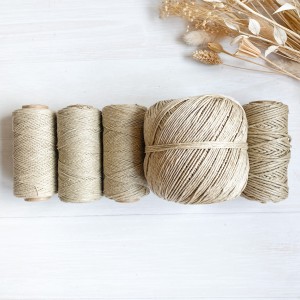
Polished linen twine
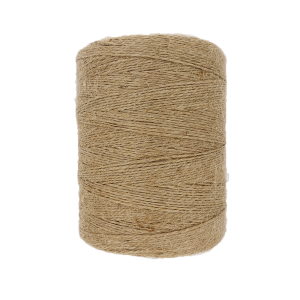
Ficelle jute 1mm ***DESTOCKAGE***
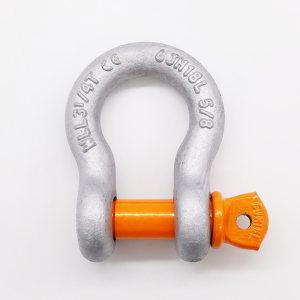
Bow shackle
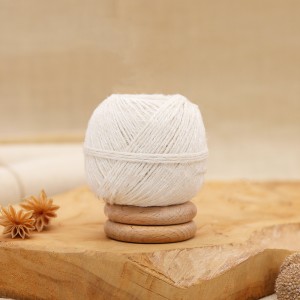
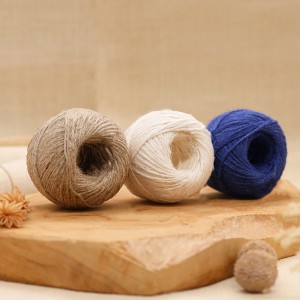
Unpolished linen twine
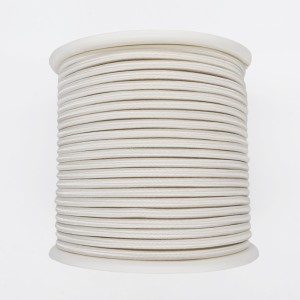
Shock cord - Elastic bungee cable
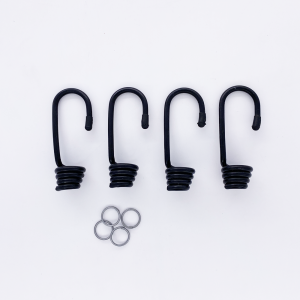
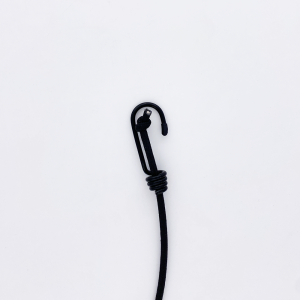
Bungee hooks - Set of 4
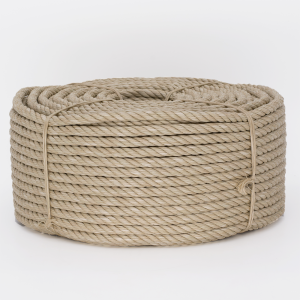
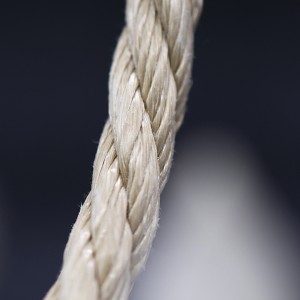
Polypropylene rope

Ficelle lin poli ***DESTOCKAGE***
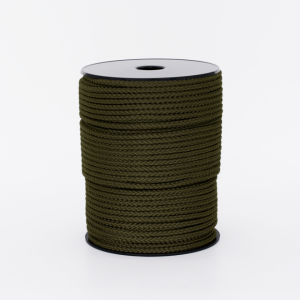
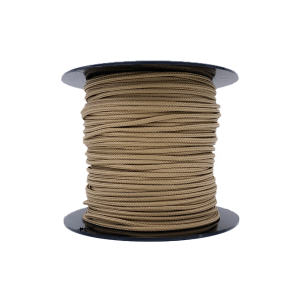
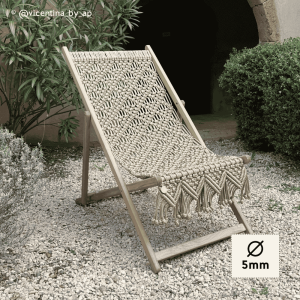
Polypropylene braid – Parallel core
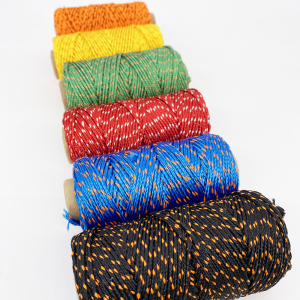
Polyester bicolor line
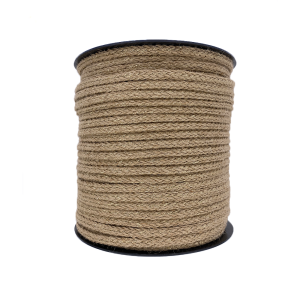
***DESTOCKAGE*** Jute braided rope
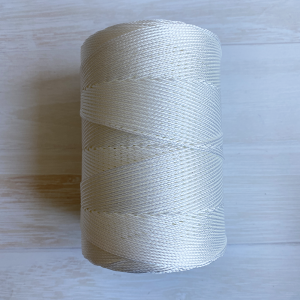
Polyamide Braid ***OUTLET***
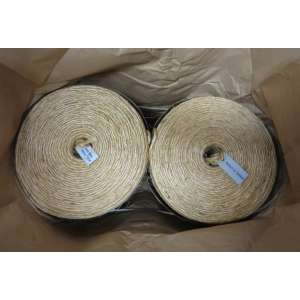
Sisal baling twine 220