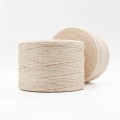
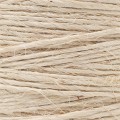
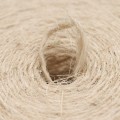


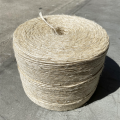
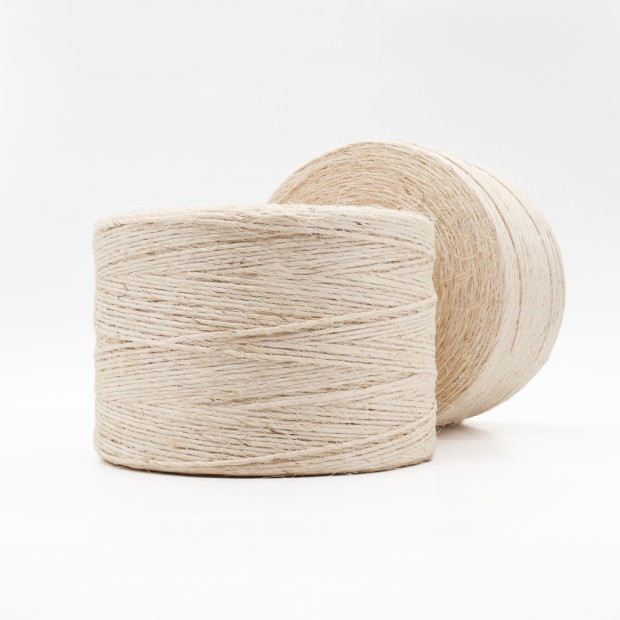
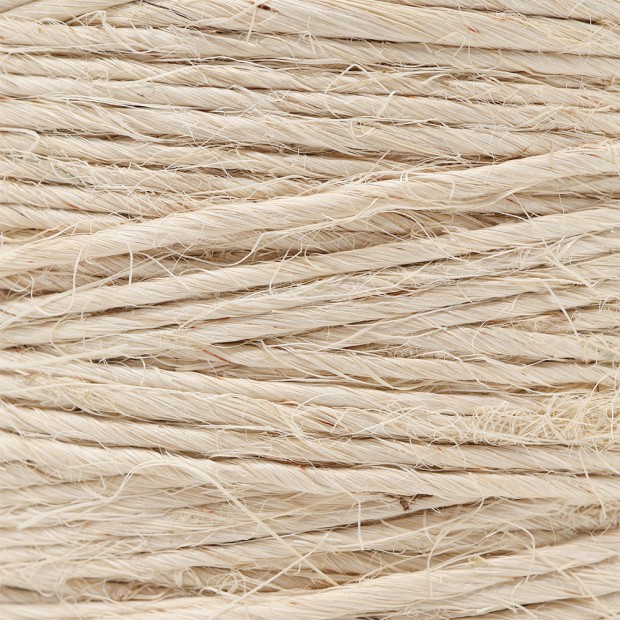
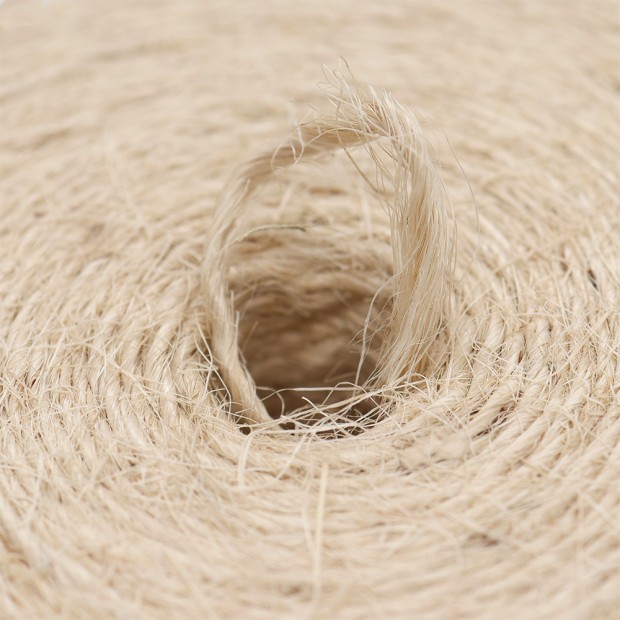


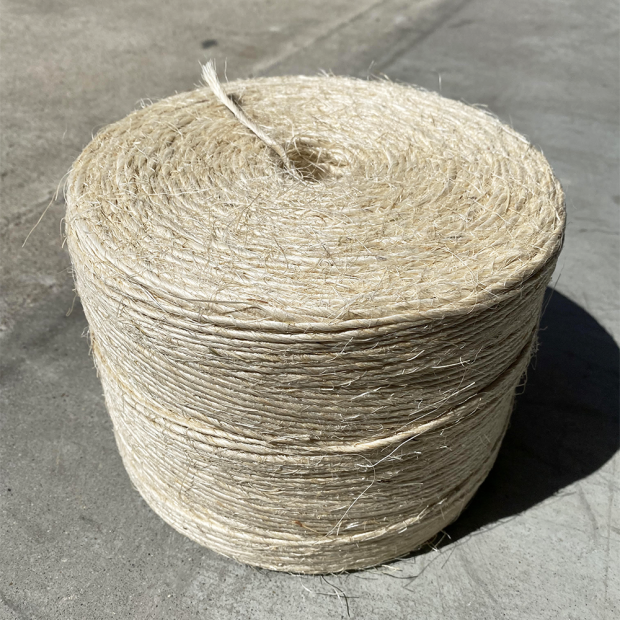
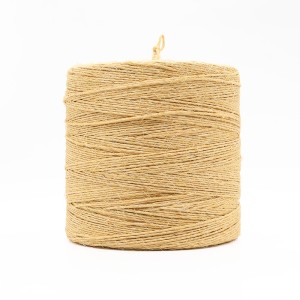
We offer two types of agricultural sisal twine type 370 for low-density balers:
- the untreated rodent-repellent twine
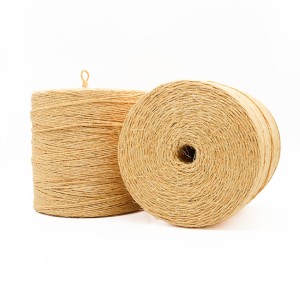
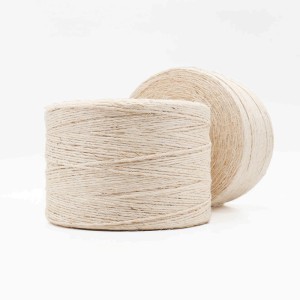
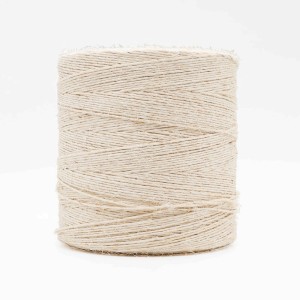
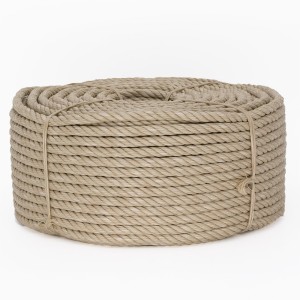
Untreated Agricultural Sisal Twine Type 370 for low-density balers or organic farming.
- the treated, rodent-repellent and oiled twine
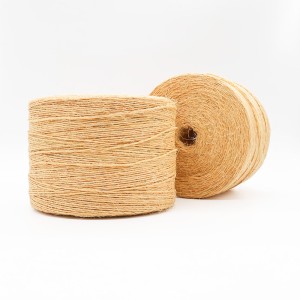
Treated Agricultural Sisal Twine Type 370 for low-density balers.
Packaging:
- Sold in packs of: 2 balls or a bag of 6 balls (25 kg)
- Other quantities available on request
- 50 bags / pallet
- Pallet weight: 1250 kg
Specifications:
- Weight of a bag of 6 balls: +/- 25 kg
- Weight of one ball: +/- 4.16 kg
- 320 meters / kg
- Breaking strength: 38 kg / ML
- “Straw yellow” for untreated twine and “orange” for treated twine
- Standard reference 370, which can replace references 300 and 350
- Please check the size of the twine compartment before ordering
- Adjust and /ou remove some thickness to adapt our product to your baler
- Complies with ISO 5080 – Sisal agricultural twine
- Treated: Moisture-resistant oil treatment and rodent repellent treatment
- Untreated: no treatment
- Sisal has a tolerance of +/- 10%
Dimensions:
| Type | Twine diameter +/- |
Roll diameter +/- |
Roll height +/- |
| Treated | 0.2 cm | 19 to 22 cm | 16.5 cm |
| Untreated | 0.2 cm | 21 to 23 cm | 17 cm |
Uses:
- For low-density balers, baling machines and tying machines (Garnier 836 - Rivierre Casalis - Coccinelle - Someca m03...)
- For small bales (square or rectangular)
- Flax harvesting / vineyard tying / hay / reed tying
- Farming, gardening, horticulture
Advantages:
- Always in stock
- A quality trusted by distributors
- Breaking strength compliant with standards
- Natural, biodegradable
- Selected long fibers, a mark of quality
- Ensures strong twine
- Safe for livestock feed
- Unwinds from the inside of the ball, with a label indicating which end to pull
- Environmentally friendly: made exclusively from natural fibers, sisal twine helps limit the environmental impact of its use
Tips:
- Equivalencies: agricultural sisal twine is thicker than agricultural plastic twine
- Storage: stand the twine upright on a pallet in the correct orientation and do not drop it to avoid abrasion.
- Store in a cool, dry place, away from dust and moisture
- To ensure the baling machine works properly, clean the knotters regularly. This helps prevent dust and oil residue from building up and clogging the knotting mechanism.
- Agricultural sisal twine type 370 is slightly finer than types 350, 330 and 300! An adjustment may be all that is needed.
- Check the diameter and height of your compartments. If the roll of twine is thicker, some twine will need to be removed to make it fit.
- On a low-density baler, sisal and plastic twine work differently. The knife must be perfectly aligned and in contact with the knotter disc, and the notch in the knotter disc must not be worn.
- Low-density balers were not designed to operate with synthetic twine.
Notes:
- Some balers will accept this sisal twine with adjustments.
- We reassure all our regular customers that our agricultural sisal twine is kept in stock and can be delivered within 24/48 hours.
The untreated sisal twine is 100% natural. It is suitable for traditional uses and organic farming.
The treated sisal twine benefits from an anti-rodent and moisture-resistant treatment (oiled), which improves its durability and resistance.
- Twine 200 and 220: medium-density balers.
- Twine 330 and 370: for low-density balers, baling and tying machines (Garnier 836 - Rivierre Casalis - Coccinelle - Someca m03...)
Related products
You will also like
copy of Pull starter polyester cord
Synthetic hemp rope
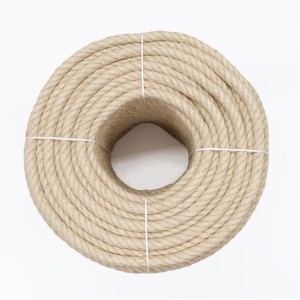
Unpolished hemp rope
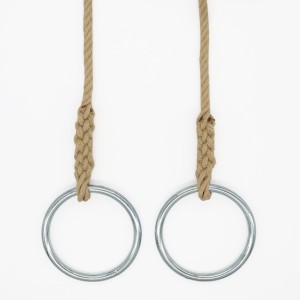
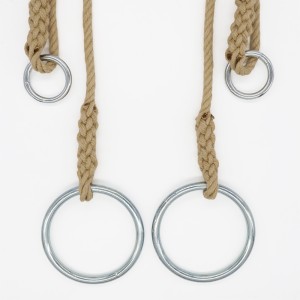
Rope gymnastic ring
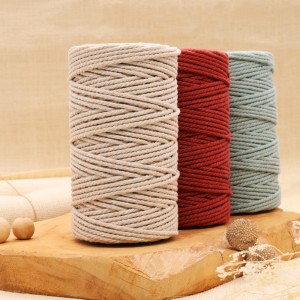
Macrame cotton rope - FR
Wooden rope ladder
Coloured hemp rope
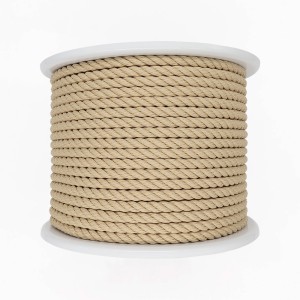
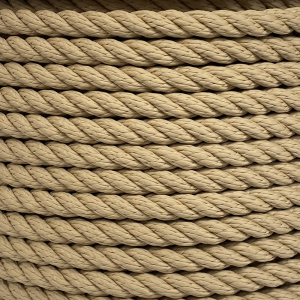
Polyester thermofixed rope
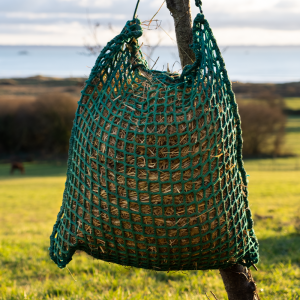

Hay net - Bag
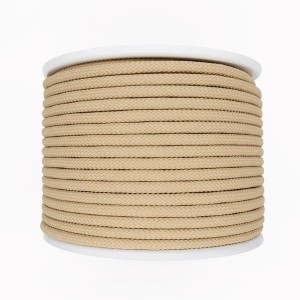
Jute braided rope
Wooden swing
Polished hemp rope
Jute twine

Polyester rope
Polypropylene rope