Filet à foin sur-mesure - Trappe à foin
How to choose the right size?
- For the length and width, add 5 cm to the dimensions of your hay chute.
- For the height, subtract at least 50 cm from the distance between the fixing point and the ground.
Example: Your hay chute measures 0.85 x 0.55 m and is located 2.50 m above the ground. Choose a net measuring 0.90 x 0.60 m, with a maximum height of 1.90 m.
New! Discover our hay chute net! It allows you to drop hay from the upper floor.
Tip:
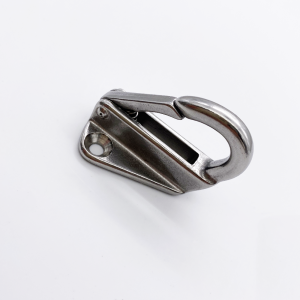
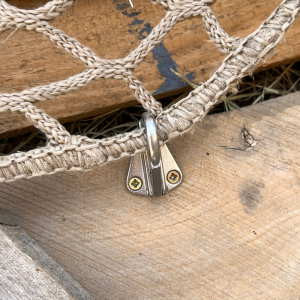
- Our plate-mounted snap hooks allow you to easily unclip the net to let straw pass through!
- For each net, order 8 snap hooks: one for each corner and one in the middle of each side.
.jpg)
Which mesh size should you choose?
The choice of mesh size may vary depending on the shape of the net, how tightly the hay is compressed and the length of the hay strands.
For the same mesh size, hay consumption will differ between a bag-shaped net and a round bale net. All the following factors should be considered when choosing your hay net.
- In a bag-shaped net, the hay is generally loose.
- In a round bale net, the hay is compressed.
Indeed, slowing down hay consumption also depends on how tightly the hay is compressed and the length of the hay strands.
- Hay compression: Hay compressed into a bale is more difficult to pull out than loose hay in a bag.
- Hay strand length: Short hay strands are more difficult to pull out than long ones.
| Outer mesh size | Inner mesh size | Colour | Purpose |
| 100 mm | 90 mm | Green |
Large mesh |
| 60 mm | 50 mm | Green |
Medium mesh |
| 45 mm | 35 mm | Camel |
Small mesh |
| 35 mm | 25 mm | Green |
Extra-small mesh |
Do custom-made hay nets meet the same quality standards as standard hay nets?
Our custom-made hay chute nets offer the same quality and meet the same specifications as our standard hay nets.
Soft, flexible, knotless netting that is gentle on horses' gums and does not cause irritation. Wear-resistant, odourless and rot-proof. Premium quality.
- Braided with 5 mm diameter twine for maximum strength and durability.
- Reinforced with an 8 mm diameter border rope around the entire perimeter.
- 100% recyclable and OEKO-TEX® Standard 100 Class I certified.
- Easy to clean with a simple water hose.
Hay nets for horses, suitable for hay racks, hay feeders, pallet boxes and large feeding troughs.
Net colour:
- 35 mm, 60 mm and 100 mm mesh: Green
- 45 mm mesh: Camel
Instructions for use
- Keep the net raised so that horses cannot get their hooves caught in it, preventing the risk of injury.
- The 100 mm mesh net must never touch the ground, as horses could get their hooves caught in it and injure themselves. The 100 mm mesh net must always be installed inside a hay rack with a closed base.
Read our hay net safety precautions
There are several ways to clean your hay net:
- Rinse with a garden hose.
- Wash in a washing machine at home or at a laundrette.
- Soak for several hours in a bathtub or large container.
The smaller the mesh, the slower the hay is taken in.
| Mesh size (outer) | Purpose | |
| 100 mm | Very large mes | Limit hay waste, familiarisation with the net |
| 60 mm | Large mesh | Consumption slows down, transition to slow feeding |
| 45 mm | Small mesh | Introduction to slow feeding |
| 35 mm | Very small mesh | Slow feeding intensification |
| Note: The size expressed is that of the outer mesh. To calculate the inner mesh, you must subtract 10mm. | ||
The slow down of ingestion also depends on the level of hay compression and the length of the stalks.
For the same mesh, the distribution of hay will be different in a bag net and a round ball net.
- In a net bag, usually hay is loose
- In a round ball net, hay is compressed
- Hay compaction: hay compressed in a haystack will be harder to catch than hay loose in a bag
- Length of the strands: hay with short strand is more difficult to catch than hay with long strand
Tips :
- If your horses cannot all eat with the mesh installed, you can arrange several different mesh nets.
- Our bag nets are also available in double mesh with different size of mesh on each side.
If this is the first time you have put hay in a net and your horse is not used to it, he may be frustrated and can get angry. We advise you to gently accustom your horse to limit his frustration.
- Ruffle the hay out of the tufts of the mesh and leave some loose hay next to the nets.
- Choose a wide mesh net (60mm, 100mm) to promote a smooth transition.
Despite all the care taken in manufacturing, the net is a textile product that can be damaged by installation or use.
To repair the hole of your hay net, you can sew your stitches with a sharp needle of 1mm maximum and linen string of 0.3mm.
You can order a custom-made hay net directly from our website. All of our custom-made hay nets are available online.
Simply select the net of your choice, indicate your mesh and dimensions and the price will be displayed automatically!
Order a tailor-made hay net allows you to choose the dimensions freely and adapt them to your needs.
You can buy a custom-made hay net if you need specific dimensions that are not offered in our standard hay net ranges.
Our nets are manufactured and delivered in +/- 4 weeks.
The choice of mesh for your custom-made hay nets is the same as for standard hay nets.
| Mesh size (outer) | Purpose | |
| 100 mm | Very large mes | Limit hay waste, familiarisation with the net |
| 60 mm | Large mesh | Consumption slows down, transition to slow feeding |
| 45 mm | Small mesh | Introduction to slow feeding |
| 35 mm | Very small mesh | Slow feeding intensification |
| Note: The size expressed is that of the outer mesh. To calculate the inner mesh, you must subtract 10mm. | ||
You will also like
Hay net - Rectangular
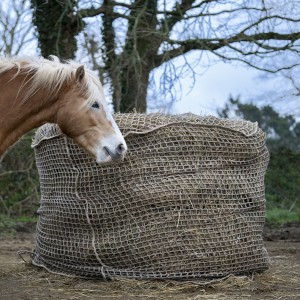
Hay net - Round bales
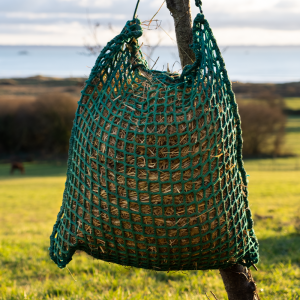

Hay net - Bag
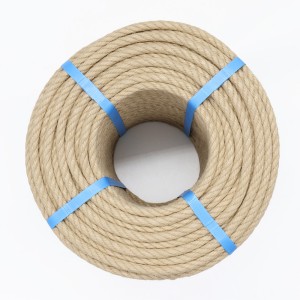
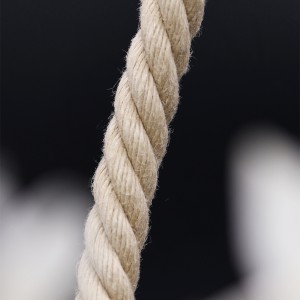
Synthetic hemp rope
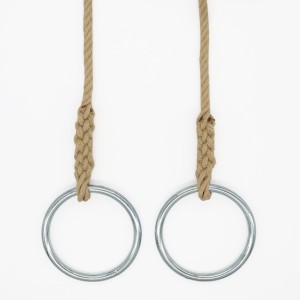
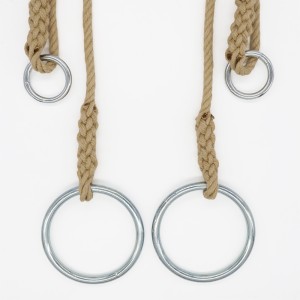
Rope gymnastic ring
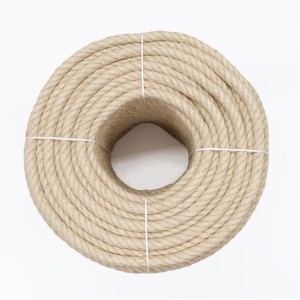
Unpolished hemp rope
Macrame cotton rope - FR
Polyester thermofixed rope
Wooden rope ladder
Coloured hemp rope
Wooden swing
Jute braided rope

Polyester rope
Polished hemp rope